
Building a Secure and Scalable Mobile Banking App: A Complete Guide to Success

In today’s rapidly evolving digital landscape, mobile banking apps have become essential for both consumers and financial institutions. Customers now expect seamless, secure, and feature-rich experiences that allow them to manage their finances at their convenience, anytime and anywhere. For banks, fintech startups, and enterprises, developing a mobile banking solution isn’t just a trend—it’s a strategic move towards digital transformation, customer engagement, and long-term business growth. Whether you’re a traditional bank looking to digitize services or a fintech startup entering the financial space, a well-designed mobile banking app can significantly enhance customer loyalty and competitive edge.
This guide will take you through the key aspects of mobile banking app development, If you’re ready to build a banking app that meets the needs of modern consumers, let’s get started.
What is Mobile Banking App Development?
Mobile banking app development involves designing, building, and deploying digital platforms that allow users to perform various financial transactions securely from their smartphones. These apps have revolutionized banking by making it easier for customers to access and manage their financial information, perform transactions, and interact with their bank or fintech provider from virtually anywhere.
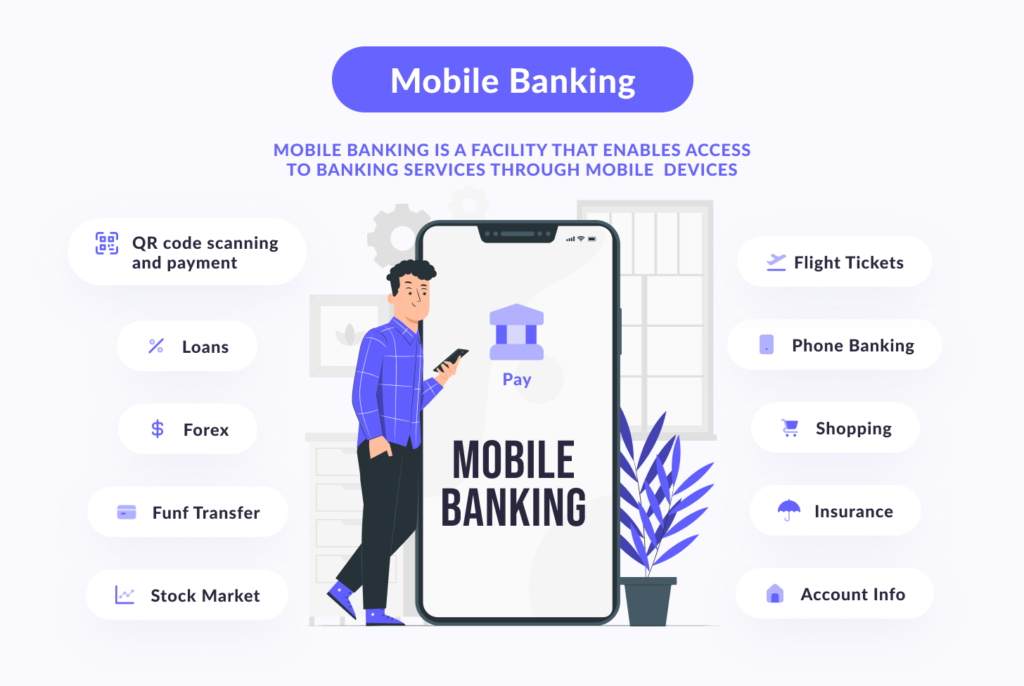
A successful mobile banking app provides a range of features, including:
- Account management: Viewing account balances, transaction histories, and recent statements.
- Payments and transfers: Sending money to friends or family, paying bills, and setting up recurring payments.
- Financial tools: Budgeting, tracking savings goals, and monitoring investments.
- Customer support: Offering live chat or AI-powered virtual assistants to address customer queries.
Why is Mobile Banking So Important?
The shift towards mobile banking is no longer just a matter of convenience; it’s an essential element of modern banking. With an increasing number of customers relying on their smartphones for everyday financial tasks, banks and fintech companies must adapt to this demand. According to recent industry data:
- More than 60% of consumers prefer mobile banking over visiting a physical bank branch.
- Global mobile banking transaction volume is expected to surpass $40 trillion by 2030.
- Banks that fail to innovate with mobile apps risk losing their customers to digital-first fintech competitors.
The Strategic Importance of Mobile Banking Apps
Mobile banking apps are more than just tools for convenience—they offer banks and fintech companies a variety of strategic benefits:
1. Enhanced Customer Convenience
A well-designed mobile banking app allows customers to manage their finances 24/7 without the need for physical visits to a branch. Whether it’s transferring funds, paying bills, or reviewing account activity, users can do it all with a few taps on their phone.
Additionally, mobile apps allow for seamless integration with digital wallets and other third-party services, providing users with faster payment options.
2. Cost Efficiency
Mobile banking apps can significantly reduce the operational costs associated with maintaining physical branches. With digital banking, customers can perform the majority of their banking activities online, eliminating the need for manual interventions and reducing labor costs. AI-powered virtual assistants and automated processes also help reduce customer service costs.
3. Increased Customer Retention & Engagement
Personalization is key to keeping customers engaged. Through AI and machine learning, banks can offer tailored recommendations based on spending habits, providing useful financial advice and alerts.
Features such as real-time notifications about transactions, bill reminders, and financial tips enhance the user experience, helping build customer loyalty.
4. Revenue Growth & Monetization
Mobile banking apps open up new revenue streams for banks. Premium subscription models can offer users access to advanced features such as personalized financial planning or exclusive investment tools. Additionally, loan and credit services can be seamlessly integrated into the app, providing another opportunity to drive revenue.
Key Features of a Mobile Banking App

Building a top-tier mobile banking app requires balancing security, usability, and a wide range of functionalities to meet customer expectations. Below are the must-have features that can define the success of a mobile banking app:
1. Comprehensive Security Features
In a world where cyber threats are constantly evolving, ensuring that users’ financial data is protected is the number one priority. A secure mobile banking app incorporates a variety of layers to safeguard sensitive information and protect users from fraud:
- Incorporating facial recognition, fingerprint scanning, or even voice recognition for easy and secure logins.
- Using industry-standard encryption like AES-256 to protect user data during transmission.
- Adding an additional layer of protection with methods like OTP (One-Time Password) or email verification.
- AI and machine learning-powered systems to detect unusual transactions and flag potential fraud in real time.
- Automatic logouts and token-based authentication to ensure sessions remain secure.
2. User-Friendly Interface
While security is critical, the user experience (UX) should never be compromised. Customers want an intuitive, easy-to-navigate app that provides quick access to the features they use most often.
Key elements of an intuitive design include:
- The registration process should be as simple as possible, with features like ID verification for secure sign-ups.
- A well-organized dashboard that displays essential account information, balances, and recent transactions.
- Allowing users to personalize the app with features like dark mode, adjustable fonts, and multi-language support.
3. Core Banking Features
These features should be at the heart of every banking app, making it simple for users to manage their finances:
- The ability to view balances, transaction histories, and download statements.
- The ability to send money to contacts or pay bills with just a few taps. Incorporating features like peer-to-peer (P2P) payments or international transfers is also highly desirable.
- Users should be able to set up recurring payments for bills and receive reminders for upcoming payments.
- Alerts for any account activity, such as transactions, failed payments, or even suspicious login attempts.
- Enabling users to deposit checks remotely by simply snapping a photo with their phone camera.
- Offering budgeting tools, savings goals, and investment tracking to help users take control of their financial future.
Development Process for a Secure and Scalable Banking App
Developing a secure, scalable, and feature-rich mobile banking app requires a clear roadmap and strategic planning. Here’s a step-by-step breakdown of the typical development process:
Requirement Gathering & Planning: Understand the target market, identify user needs, and outline the app’s core features.
Design & Prototyping: Develop wireframes and UI/UX prototypes to establish the visual look and feel of the app.
Development & Coding: This phase involves building the back-end infrastructure and front-end app interfaces, ensuring that the app integrates with existing banking systems.
Security Implementation: Focus on robust security features such as encryption, multi-factor authentication, and fraud detection systems.
Testing & Quality Assurance: Conduct rigorous testing, including functional, performance, and security testing, to ensure that the app is bug-free and secure.
Deployment & Launch: After final testing and approval, launch the app on app stores and prepare for customer onboarding.
Ongoing Maintenance & Updates: Regularly update the app with new features, security patches, and performance improvements to keep it competitive.
The Future of Mobile Banking Apps
Emerging technologies like AI, blockchain, and open banking are set to redefine the future of mobile banking apps. AI-driven chatbots, for example, are becoming increasingly sophisticated, offering personalized financial guidance and handling customer inquiries. Blockchain can improve the transparency and security of transactions, while open banking is enabling third-party developers to create innovative financial products that integrate seamlessly with banking apps.
Conclusion
Building a secure and scalable mobile banking app is a multifaceted task that requires careful planning, design, and implementation. Financial institutions can develop mobile apps that enhance customer experience, drive business growth, and stay ahead of the competition by focusing on key features like robust security, user-friendly interfaces, and core banking functionalities. Whether you’re a traditional bank or a fintech startup, investing in a high-quality mobile banking app will pave the way for digital transformation and future success.